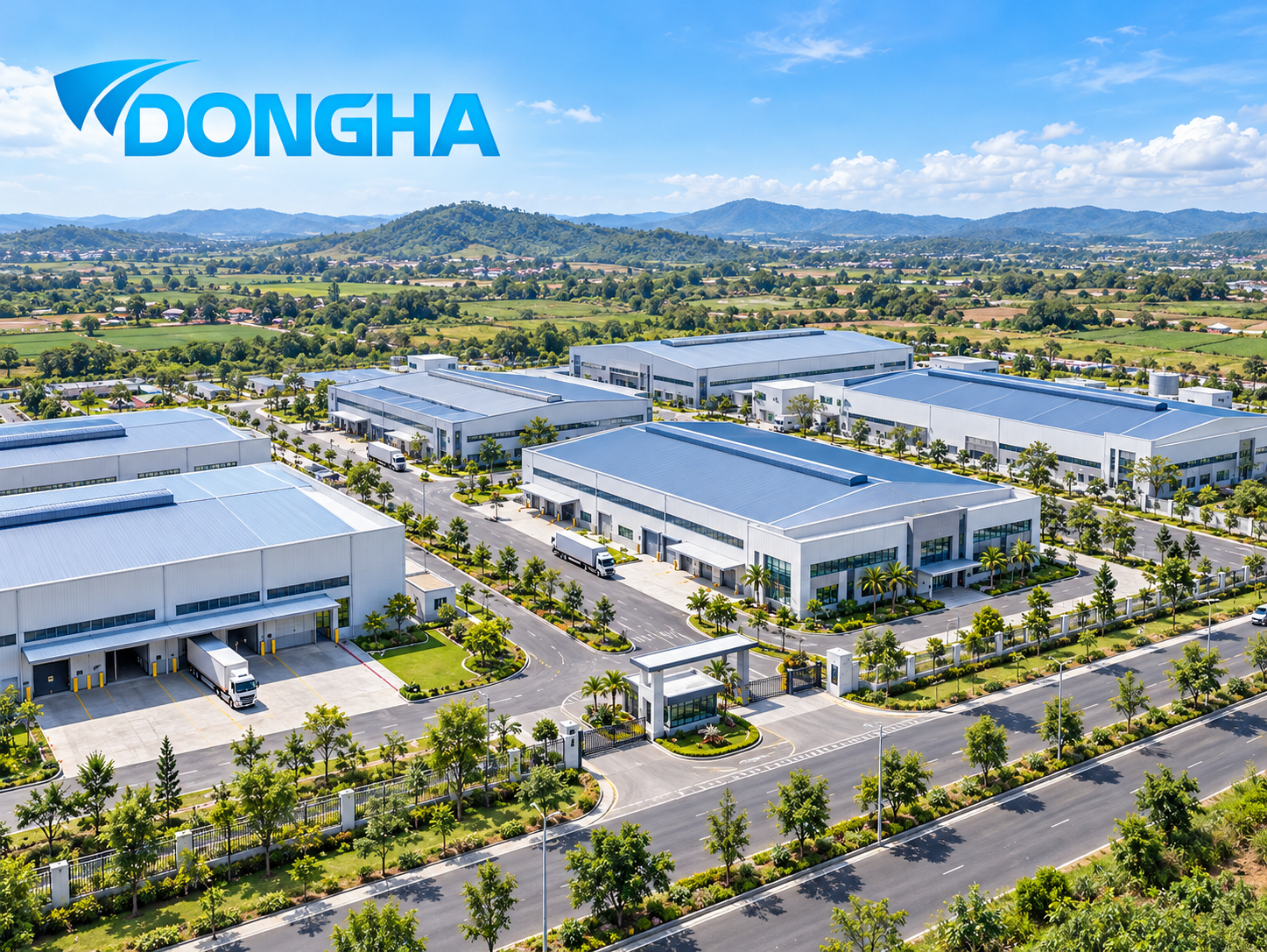
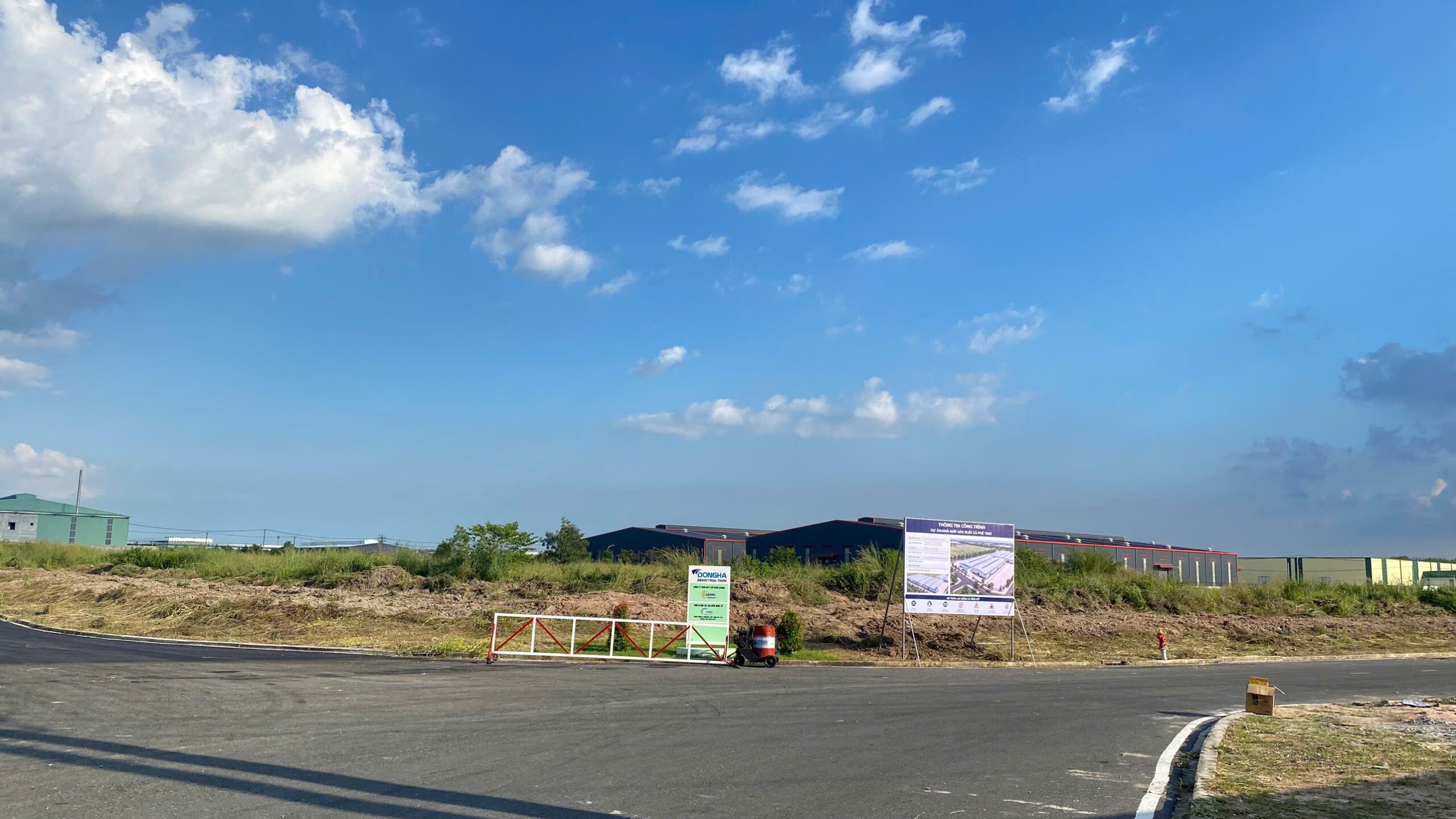
As Vietnam works toward its Net Zero target by 2050, industrial parks following the eco model are becoming a development model of special interest to the Government and many investors. Beyond meeting environmental protection requirements, this model also helps businesses optimize production costs, improve competitiveness and attract green FDI. So what is an eco-industrial park? What are the conditions for recognition? Let’s find out with Dong Ha in the article below.
1. What is an eco-industrial park?
Under Decree No. 35/2022/NĐ-CP dated 28 May 2022 on the management of industrial parks and economic zones: “An eco-industrial park is an industrial park in which enterprises take part in cleaner production and efficient use of resources, and link and cooperate in production to carry out industrial symbiosis activities; meeting the criteria prescribed in this Decree.”

2. The latest 8 regulations on eco-industrial parks
Article 37 of Decree No. 35/2022/NĐ-CP dated 28 May 2022 sets out 8 specific criteria for eco-industrial parks , summarized by Dong Ha IP as follows:
2.1. Shared infrastructure and a minimum 25% green space ratio
The total land area for green space, roads, technical areas and shared social infrastructure must reach at least 25% of the total planned area of the industrial park approved by the competent state authority, in line with national technical standards and construction planning.
In practice, a large share of green space and shared infrastructure helps absorb CO2 from production activities and creates a pleasant environment for workers.
2.2. Housing and public amenities for workers
For an eco-industrial park , the developer does not stop at creating a production environment but must also care for workers. Specifically, there must be solutions for housing and public service facilities for workers in the park, such as housing, canteens, medical stations, nurseries and recreation areas.
2.3. The infrastructure investor has complied with the law for 3 years
Under this criterion, the developer must have had no serious violations of the law for 3 consecutive years from the time of registration for certification, in particular no serious violations of regulations on investment, enterprises, construction, land, environmental protection and labor.
Complying with the law demonstrates the investor’s capability, reputation and long-term, responsible commitment.
2.4. Full provision of essential infrastructure
One of the criteria for an eco-industrial park is the full provision of essential infrastructure such as power, water, telecommunications, fire protection, wastewater treatment and other related essential infrastructure.
2.5. At least 1 industrial symbiosis link and application of ISO standards
The biggest difference between the eco-industrial park model and traditional industrial parks lies in industrial symbiosis. Instead of each business operating independently, the waste or by-products of one business become raw materials for another. This reduces waste treatment costs, saves raw materials and reduces emissions into the environment.
The latest Decree 35/2022 adds a condition: enterprises taking part in industrial symbiosis in the park must apply production and environmental management systems in line with the relevant standards of the International Organization for Standardization (ISO).
2.6. At least 20% of enterprises in the park apply resource-efficient production solutions
Of the enterprises in the park, at least 20% must be applying cleaner production and resource-efficiency solutions and achieve actual results such as savings in raw materials, materials and clean energy, and reductions in waste and scrap discharged into the environment.
Note that this criterion requires measurable results, not just registration or commitments on paper. The enterprise must prove it with concrete figures.
2.7. An input-output monitoring mechanism
Investors in the industrial park must jointly build and operate an input-output monitoring mechanism for the use of raw materials, energy, chemicals, waste and scrap in the park. Monitoring results are compiled into periodic annual reports on resource efficiency and emissions, which are then submitted to the Management Board of Industrial Parks and Economic Zones.
With this mechanism, the park can detect resource waste early and build a real database to find symbiosis opportunities between businesses in the park.
2.8. Annual publication of environmental protection and social responsibility reports
Every year, the infrastructure developer must report on environmental protection and social responsibility toward neighboring communities. In addition to being sent to the Management Board of Industrial Parks and Economic Zones, this information must also be published on the company’s website so that residents and stakeholders can access it.
This criterion applies not only internal monitoring but also external oversight. The eco-industrial park must honor its commitments, because the results are published every year.
3. How does an eco-industrial park differ from a regular industrial park?
The criteria above are what set eco-industrial parks apart from traditional industrial parks. Below is an overview comparison table.
|
Eco-industrial park |
Regular industrial park |
|
| Waste management | The waste of one business can be the raw material of another (industrial symbiosis) | Each business must treat its own waste |
| Green space | At least 25% of the area for green space, water surface and shared infrastructure | No mandatory ratio |
| Environmental standards | Compliance plus proactive annual reporting, ISO certified | Compliance with environmental law |
| Worker amenities | Guaranteed housing, canteens, healthcare and nurseries for workers | Not mandatory |
| Information sharing | Annual monitoring mechanism for resources and emissions | Not mandatory |
| Cleaner production | At least 20% of businesses in the park apply cleaner production solutions | Depends on each business |
Regular industrial parks usually focus on production and profit, while eco-industrial parks require businesses to cooperate to create symbiotic relationships and reduce their impact on the surrounding environment.
4. What are the benefits of an eco-industrial park?

4.1. Economic benefits
For investors in an eco-industrial park , the economic benefits are:
- Saving raw materials and energy: Promoting the reuse of materials and energy. As a result, businesses can reduce production costs and improve overall economic efficiency.
- Lower treatment costs: The symbiotic relationship allows businesses to share common service costs such as waste management, staff training, supplies and other support services.
- Financial support when adopting new technology: Eco-industrial parks give businesses in the park the opportunity to adopt new technologies with financial support mechanisms. Applying advanced technology helps improve products and production processes and strengthens market competitiveness.
4.2. Social benefits
The eco-industrial park model brings many benefits to society, such as:
- Improving workers’ quality of life: Businesses in eco-industrial parks must strictly follow occupational safety and health protection policies, helping to reduce the risk of workplace accidents and ensure workers’ health and safety.
- Improving the community’s quality of life: Eco-industrial parks include public amenities such as housing, schools, hospitals and transport infrastructure, thereby improving the quality of life of communities around the park.
- Achieving sustainable state management goals: Eco-industrial parks aim for sustainable solutions, international commitments and environmental protection.
- Improving competitiveness and profits: Eco-industrial parks help promote more efficient use of resources and energy, improve processes and save costs, creating a strong competitive foundation and higher profits for businesses operating in the park.
4.3. Environmental benefits
The greatest role of eco-industrial parks is helping to protect environmental resources. Specifically:
- Reducing toxic emissions and greenhouse gases: Eco-industrial parks apply advanced technologies and cleaner production processes, minimizing toxic POP emissions and greenhouse gases, helping to protect the environment and mitigate the impacts of climate change.
- Shared amenities in the industrial park: Some shared public facilities include wastewater treatment plants, waste management systems and green infrastructure. Businesses can share these facilities to reduce their own investment costs and create a sustainable environment.
5. The current state of eco-industrial parks in Vietnam
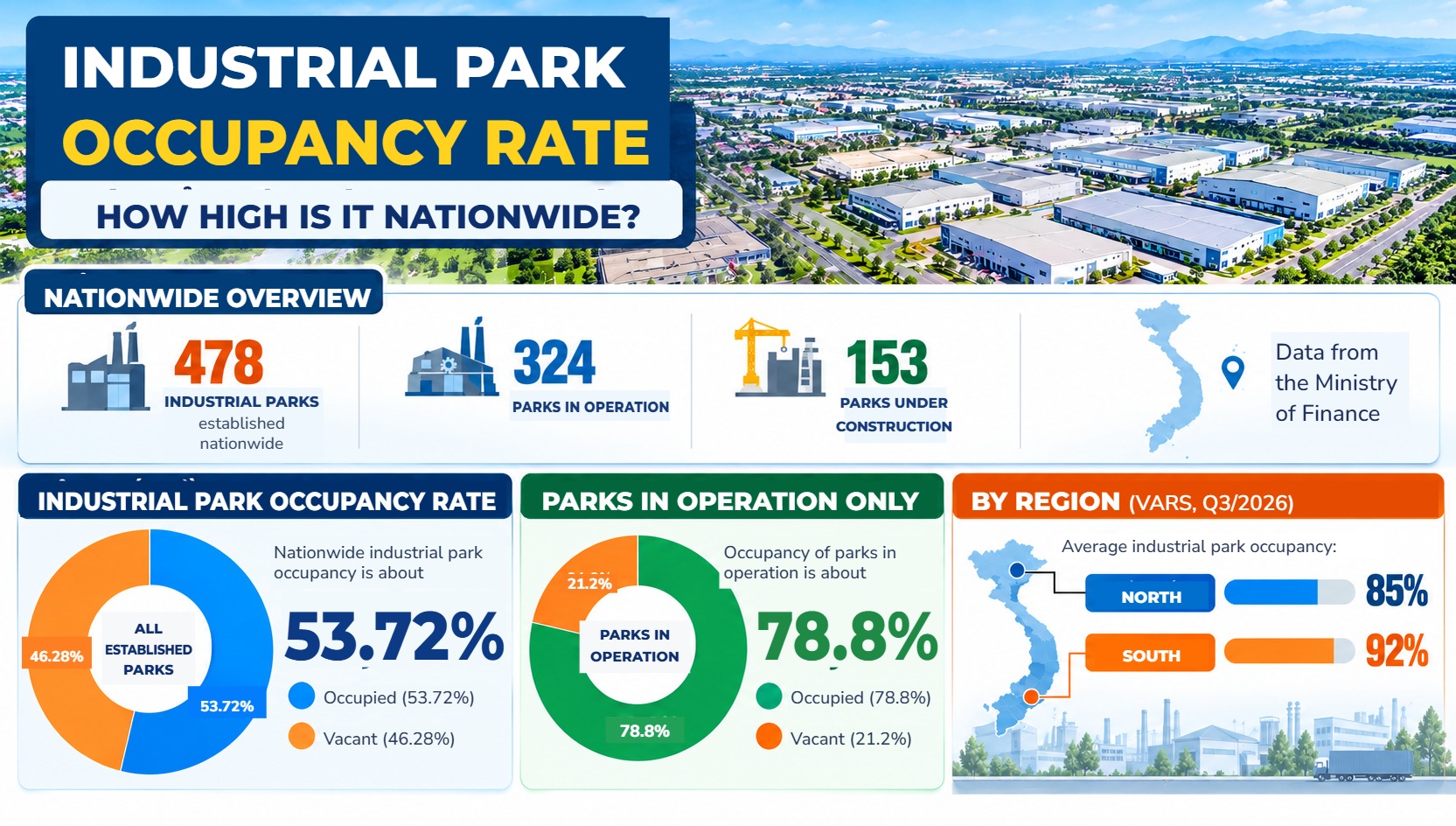
According to statistics from the Foreign Investment Agency of the Ministry of Finance, Vietnam currently has 478 established industrial parks; however, the number of eco-industrial parks is still modest, with only 1 – 2% of parks converted to or applying green standards. Specifically, there are 4 notable eco-industrial parks:
| Park name | Information |
| Hoa Khanh Industrial Park |
|
| Deep C Industrial Park |
|
| Nam Cau Kien Industrial Park |
|
| Nam Dinh Vu Industrial Park |
|
6. Development trends of eco-industrial parks in Vietnam
In the context of sustainable development and climate change response, developing eco-industrial parks is an inevitable trend. This model fits Vietnam’s net-zero emissions target by 2050 and is linked to policies promoting cleaner production, efficient resource use and emission reduction.
With support from UNIDO and domestic technical partners, Vietnam has more favorable conditions to develop this model. In addition, the direction set out in Resolution 29-NQ/TW shows the State’s orientation toward green and sustainable industrial development, laying the foundation for promoting eco-industrial parks. On this basis, Vietnam’s green industrial park development programs aim to have about 30 – 40 industrial parks certified as eco-industrial parks by 2030.
This shows that this type of industrial park is no longer an experimental trend but is gradually becoming a long-term development direction for Vietnam’s industry, helping to improve competitiveness, attract high-quality FDI and meet sustainable development standards in international markets.

The information above on eco-industrial parksis what Dong Ha hopes will answer your questions about this model. This model is a key area of future development, bringing economic benefits to businesses and communities, helping to protect the environment and improving the quality of life of workers and those around them.